David Klein · 13 October 2026
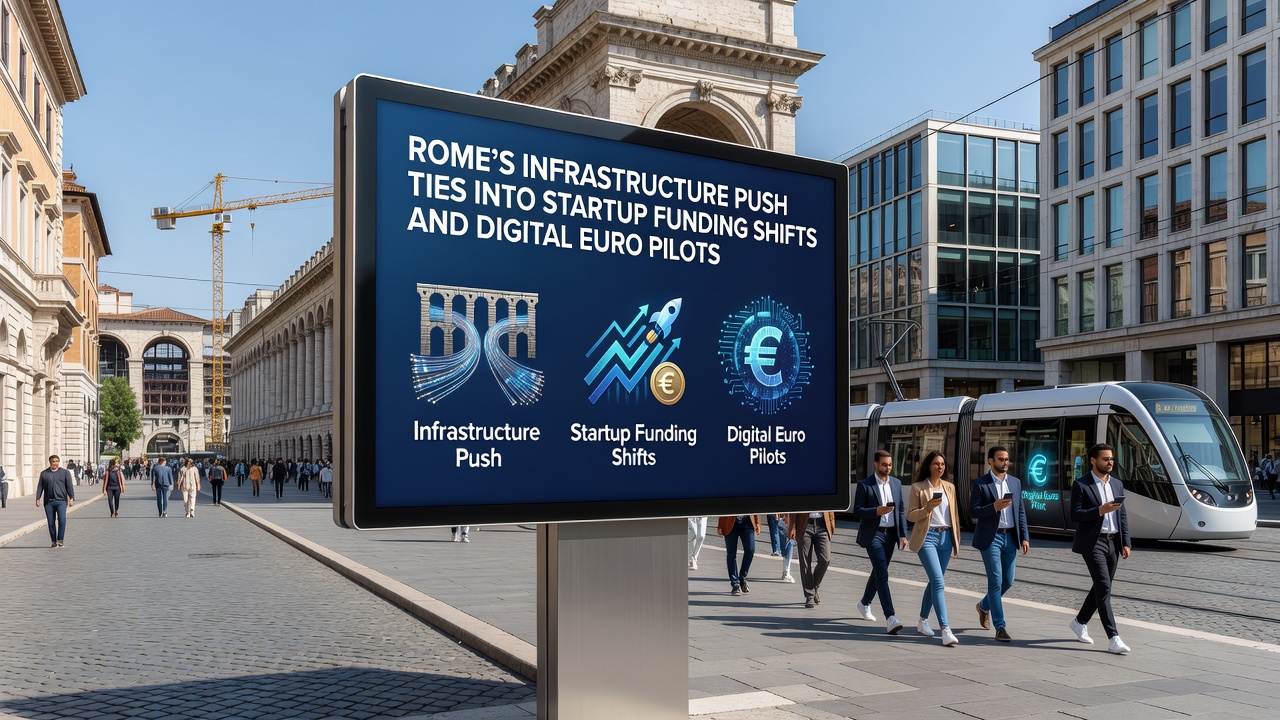
Rome Advances Major Infrastructure Upgrades Linking to Startup Funding Patterns and Digital Euro Initiatives
Rome continues to expand its transportation networks and digital connectivity projects as part of broader national efforts that intersect with evolving startup investment landscapes and the European Central Bank's ongoing digital euro experiments, with fresh developments noted in October 2026 showing coordinated timelines across these areas.
City officials have directed resources toward metro extensions and broadband infrastructure upgrades while private equity flows into Italian technology firms adjust in response to regulatory signals from EU financial pilots, according to reports compiled by the Bank of Italy and cross-referenced with European Investment Bank data.
Infrastructure Projects Underway in the Capital
Construction teams have accelerated work on Line C of the Rome Metro system along with fiber optic expansions in peripheral districts, moves that coincide with policy frameworks designed to attract early-stage companies working in mobility and fintech solutions, and these efforts draw from multi-year budgets approved at both municipal and EU levels.
Funding allocations for these builds reached several billion euros by mid-2026, with contractors reporting progress on smart traffic systems that integrate with pilot programs testing programmable digital currency features for public procurement payments.
Shifts Observed in Startup Capital Allocation
Investment rounds for Roman-based startups focused on urban technology solutions have shown changes in valuation multiples and investor composition during 2026, with data from industry trackers indicating a pivot toward firms that align with infrastructure modernization goals rather than purely consumer applications.
One analysis released by the OECD highlighted how seed funding in southern European tech hubs adjusted following announcements about infrastructure timelines, creating opportunities for companies developing sensors and data platforms that could interface with emerging digital payment rails.
Observers note that venture firms from outside Italy have increased participation in these rounds while domestic funds recalibrate portfolios around projects with clear ties to public works contracts.

Digital Euro Pilot Integration Points
The European Central Bank's digital euro testing phases have incorporated use cases involving municipal service payments in select Italian cities including Rome, where infrastructure contractors receive staged disbursements through simulated programmable features that allow conditional releases tied to project milestones.
These trials, documented in ECB progress updates, demonstrate how offline functionality and settlement speed improvements could streamline large-scale public spending on roads, utilities, and connectivity networks while reducing administrative overhead for participating startups supplying technology components.
Researchers at several European universities have examined transaction data from the pilots and found correlations between infrastructure payment volumes and increased startup activity in related supply chains, although full-scale rollout remains subject to legislative review scheduled for later in the decade.
Interconnections Across Policy Areas
Policy documents from the Italian Ministry of Economy and Finance outline how infrastructure financing mechanisms now reference digital currency standards under development, creating feedback loops that influence both public tender processes and private capital deployment strategies.
Companies awarded contracts for Rome's expansion projects increasingly incorporate digital euro compatibility requirements into their proposals, a development that has prompted adjustments in how early-stage investors evaluate technology roadmaps for mobility and payment applications.
Regional and International Context
Similar patterns appear in other EU member states where infrastructure initiatives overlap with central bank digital currency experiments, yet Rome's specific combination of historical preservation constraints and rapid tech adoption creates distinct implementation challenges tracked by international financial institutions.
Cross-border investment data compiled through 2026 shows continued interest from North American and Asian funds in Italian startups positioned at this intersection, with deal flow influenced by the visibility of pilot results and construction timelines.
Conclusion
Developments in Rome's infrastructure sector, startup funding dynamics, and digital euro pilots continue to evolve in parallel, with October 2026 marking another checkpoint in coordinated timelines across these domains, and further updates expected as testing phases advance and construction milestones are reached.