Willa Schulz · 27 October 2026
Parliamentary Shifts Unlock Allocations Connecting Milan's Design Field with Mountain Resources and Seaside Protections
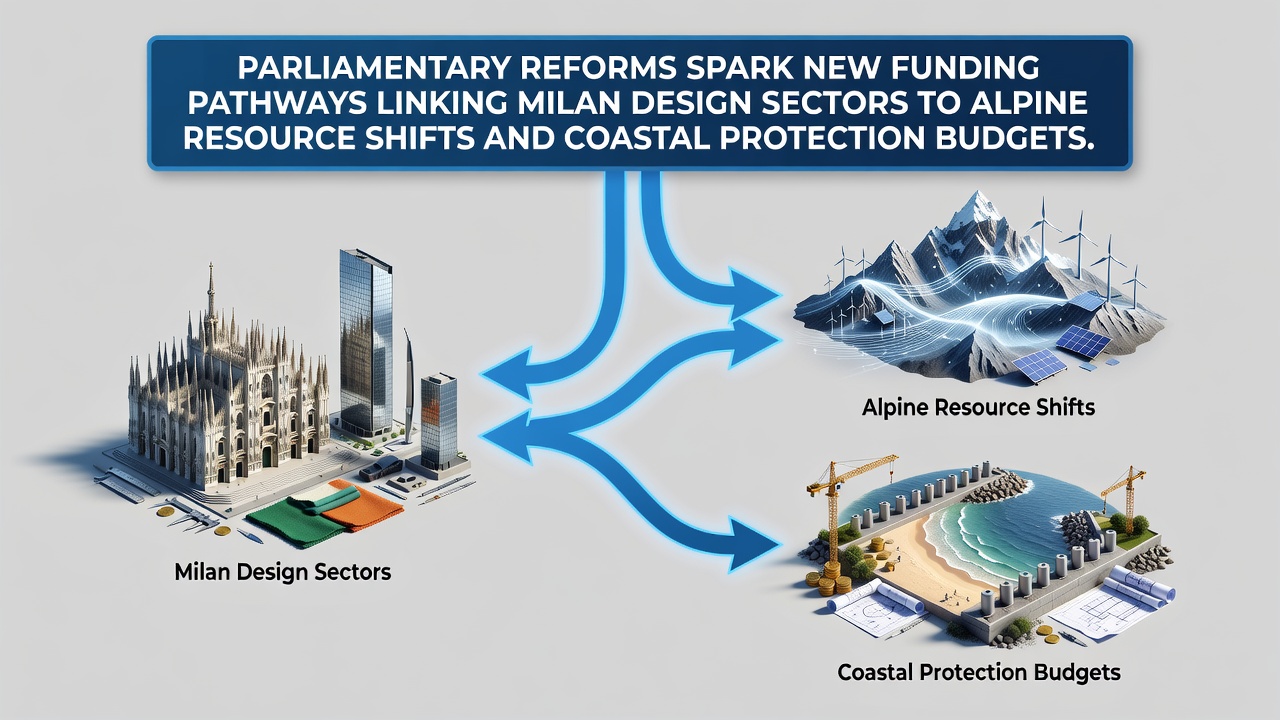
Parliamentary changes approved in October 2026 have established direct mechanisms that route portions of national and regional budgets from Milan's design and manufacturing clusters into programs addressing resource management in the Alps while also supporting infrastructure for shoreline defense along the Adriatic and Tyrrhenian coasts, and data from the Italian Ministry of Economy and Finance shows these reallocations total approximately 1.2 billion euros over the initial three-year cycle.
Legislative Framework and Timeline
The reforms emerged from committee reviews that began in early 2025 and concluded with final votes in the Chamber of Deputies during the second week of October 2026, where provisions now require that a fixed percentage of tax revenues generated by design exports and licensing fees be matched with counterpart funding from environmental ministries, and this structure replaces earlier discretionary grant systems that had operated on annual competitive calls.
Observers note that the new statutes also create oversight boards composed of representatives from the Lombardy regional council, the Autonomous Provinces of Trento and Bolzano, and coastal authorities in Veneto and Liguria, while the boards hold authority to approve project pipelines that combine elements such as sustainable material sourcing from alpine forests with pilot installations of wave-attenuating barriers near port cities.
Connections to Design Sector Revenues
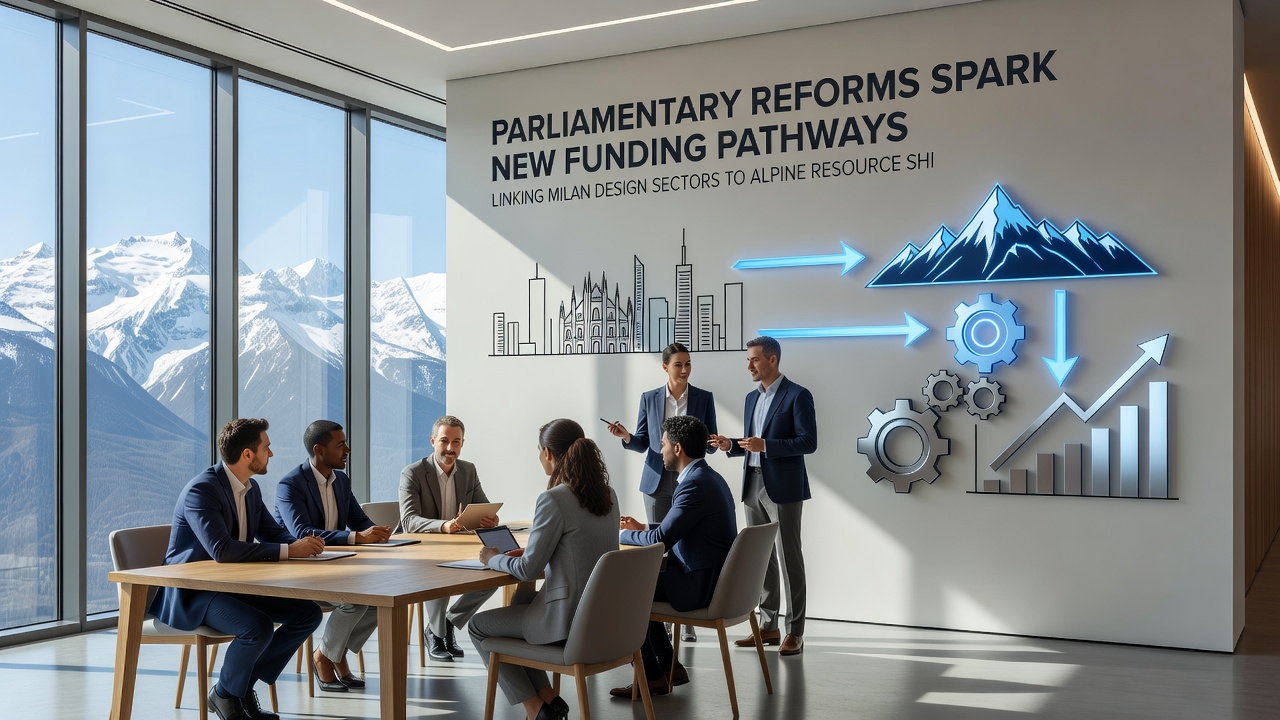
Milan's design economy, which recorded export values exceeding 8.4 billion euros in 2025 according to figures published by the Italian Trade Agency, now contributes through a dedicated levy that feeds into the unified allocation pool, and industry associations report that participating firms can receive expedited permitting for production sites when they demonstrate alignment with alpine timber certification standards or coastal habitat restoration metrics.
Alpine Resource Adjustments
Resource shifts in the Alps under the reformed framework focus on reforestation initiatives that prioritize species resilient to changing precipitation patterns, and these efforts draw on design-sector financing to supplement existing EU cohesion funds allocated through the Alpine Convention protocols, where monitoring stations installed since 2024 have recorded a 14 percent reduction in snowpack duration at mid-elevation sites.
Projects already underway include the conversion of select logging roads into multi-use trails that support both tourism and emergency access, while design firms supply modular structures fabricated from certified wood that serve as temporary shelters during avalanche mitigation work.
Coastal Protection Integration
Coastal budgets receive parallel inflows that target erosion control and wetland reinforcement, with allocations directed toward regions where design-derived revenues exceed predetermined thresholds, and the National Institute for Environmental Protection and Research has documented that such targeted spending has accelerated permitting for 23 separate breakwater and dune-rebuilding schemes between Genoa and Trieste since the legislation took effect.
Funding formulas now incorporate performance indicators that measure both biodiversity recovery and reduced maintenance costs for existing seawalls, which allows coastal municipalities to draw additional tranches when annual reports demonstrate measurable outcomes.
Implementation Mechanisms and Reporting
Administrative procedures require quarterly submissions through a centralized digital platform managed by the Ministry for Ecological Transition, and participating entities must provide geospatial data that maps expenditure against specific alpine catchments and coastal cells, while independent audits conducted by the Court of Auditors verify compliance with the cross-sector linkage rules established in the October 2026 statute.
Early case examples include a consortium of Milan-based furniture manufacturers that financed sensor networks for glacier-fed river monitoring in the Aosta Valley in exchange for streamlined customs procedures on certified sustainable materials, and similar arrangements have emerged along the Marche coastline where design licensing income supports submerged reef installations that protect mussel aquaculture zones.
Conclusion
The October 2026 parliamentary measures have produced traceable funding corridors that link design-sector performance in Milan with measurable actions in both alpine and coastal domains, and ongoing data collection through established government portals will determine whether the model scales to additional sectors in subsequent legislative cycles.