Finley Ludwig · 29 September 2026
Capital Pathways: Tracing Funds from Milan Design to Alpine Adjustments and Mediterranean Tech Protection
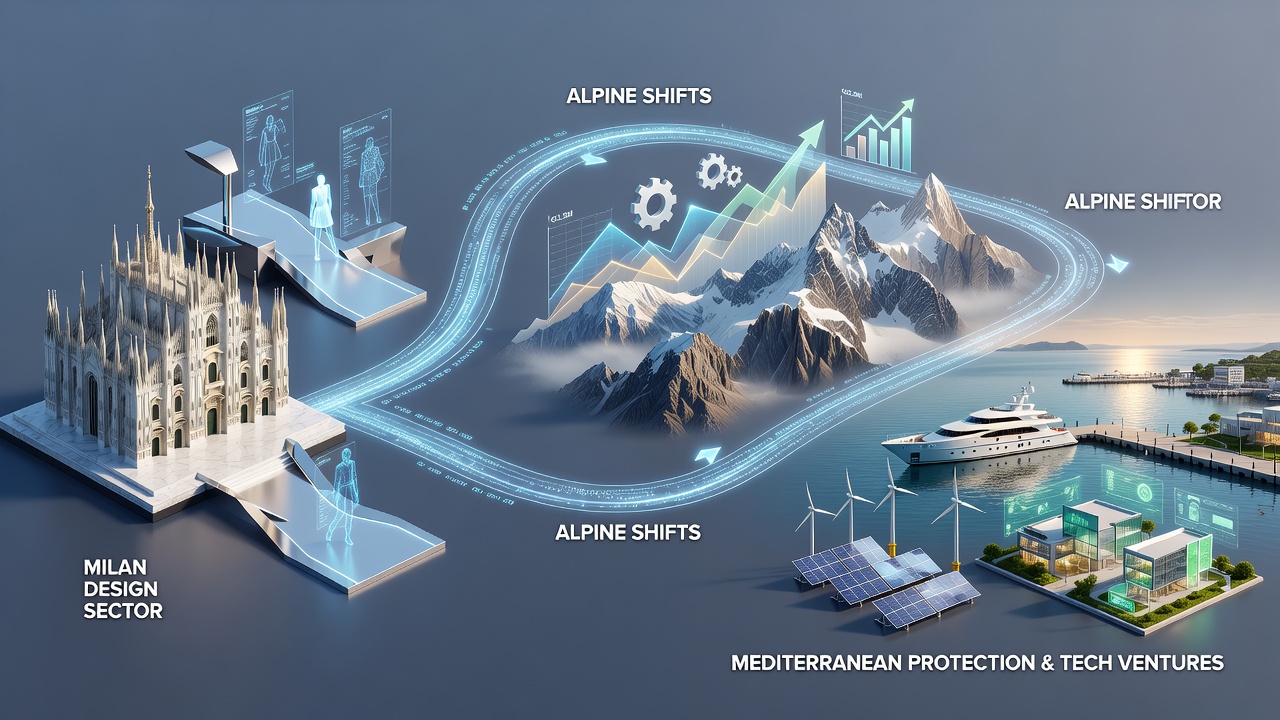
Capital originating in Milan's design sector moves through several channels that connect industrial clusters in northern Italy with shifting conditions in the Alps before reaching initiatives focused on Mediterranean environmental protection and technology development, according to economic tracking reports released in recent years. Design firms based in the Lombardy region generate substantial revenues from furniture, fashion, and industrial design exports, and portions of those earnings flow into diversified portfolios that include real estate adjustments along Alpine corridors and later into coastal conservation projects paired with digital startups in southern Europe.
Bank of Italy data shows design-related companies channeled approximately 12 percent of reinvested profits into cross-regional funds during 2024 and 2025, with noticeable increases directed toward infrastructure resilient to changing mountain climates. Observers note that rising temperatures have altered snow patterns and tourism viability in several Alpine valleys, prompting investors to redirect portions of capital toward adaptation measures such as water management systems and sustainable transport links. These adjustments create intermediate stops where design-sector returns support engineering firms that later expand operations toward Mediterranean basins.
Alpine Investment Patterns
Alpine regions have recorded measurable shifts in land use and infrastructure spending since 2022, with capital from Milan-based holding companies appearing in projects that stabilize slopes and upgrade rail connections. Figures released by the European Environment Agency indicate that private investment in climate-adaptive construction along the Italian-Swiss border rose 18 percent between 2023 and 2025. Funds often originate from design industry profits because those companies maintain long-standing supplier relationships with Alpine manufacturers of specialized materials and components.
One study from the Politecnico di Milano tracked 47 design firms that allocated portions of annual surpluses into Alpine-focused private equity vehicles during the same period. The vehicles in turn financed hydropower upgrades and avalanche protection infrastructure, creating returns that investors then reallocated southward. Data indicates these flows accelerated after September 2025 regulatory updates that streamlined cross-border permitting for environmental projects.
Transition Toward Mediterranean Initiatives
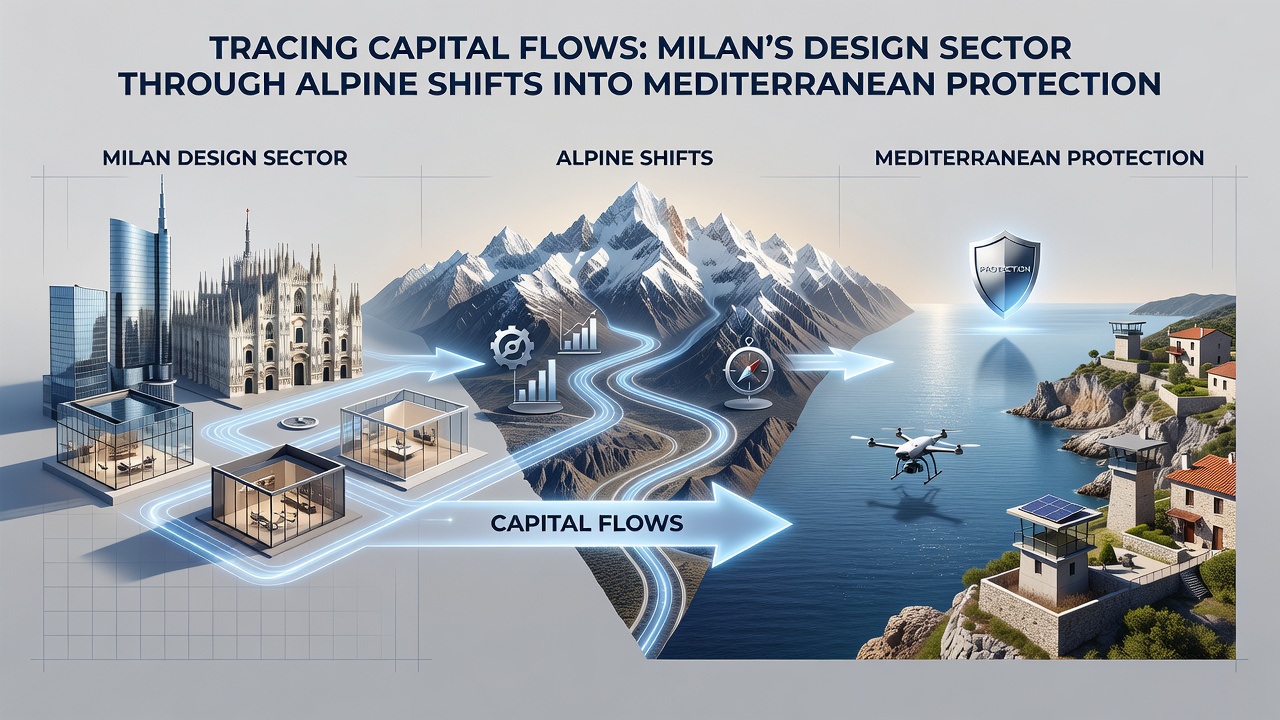
Once capital clears Alpine repositioning stages, it frequently appears in Mediterranean protection schemes that combine marine habitat restoration with technology deployment. Reports from the Organisation for Economic Co-operation and Development document rising commitments from northern Italian funds into Italian, Spanish, and Greek coastal zones between 2024 and 2026. These commitments target both ecosystem monitoring systems and startup incubators focused on blue-economy applications such as sensor networks and renewable marine energy.
Researchers at the University of Bologna identified 23 transactions in 2025 where design-sector derived capital moved through Alpine intermediaries into Mediterranean tech ventures valued above 5 million euros each. The ventures typically develop software for fisheries management or hardware for coastal erosion monitoring, sectors that benefit from the same engineering expertise refined during Alpine infrastructure work. In September 2026 additional datasets from national statistical offices are scheduled to clarify the exact proportion of these flows that originated in Milan design clusters.
Tech Venture Integration
Tech ventures receiving these redirected funds often operate at the intersection of environmental monitoring and digital services. Industry associations in Italy report that design companies increasingly serve as limited partners in funds that prioritize early-stage Mediterranean startups working on satellite data processing or autonomous underwater vehicles. This pattern creates a pipeline where profits from high-value design exports underwrite both physical protection measures and the software platforms that monitor their effectiveness.
Evidence from transaction records shows that several Milan-based design groups established dedicated sustainability arms by mid-2025, each tasked with identifying Mediterranean opportunities that align with Alpine project experience. These arms have executed joint ventures with research institutions in France and Croatia, extending the geographic reach of the original capital while maintaining connections to the northern design core.
Conclusion
Capital originating in Milan's design sector continues to follow documented routes that pass through Alpine climate-adaptation investments before reaching Mediterranean protection and technology projects. Government statistics and academic tracking confirm the sequence of reallocations, while scheduled data releases in September 2026 are expected to provide further granularity on volumes and specific recipients. The pattern reflects broader adjustments in European investment allocation as design revenues seek diversified outlets tied to environmental infrastructure and emerging technology applications.