Finley Sullivan · 15 September 2026
Alpine Thaw Patterns Reshaping Wine Export Routes and Mediterranean Conservation Budgets
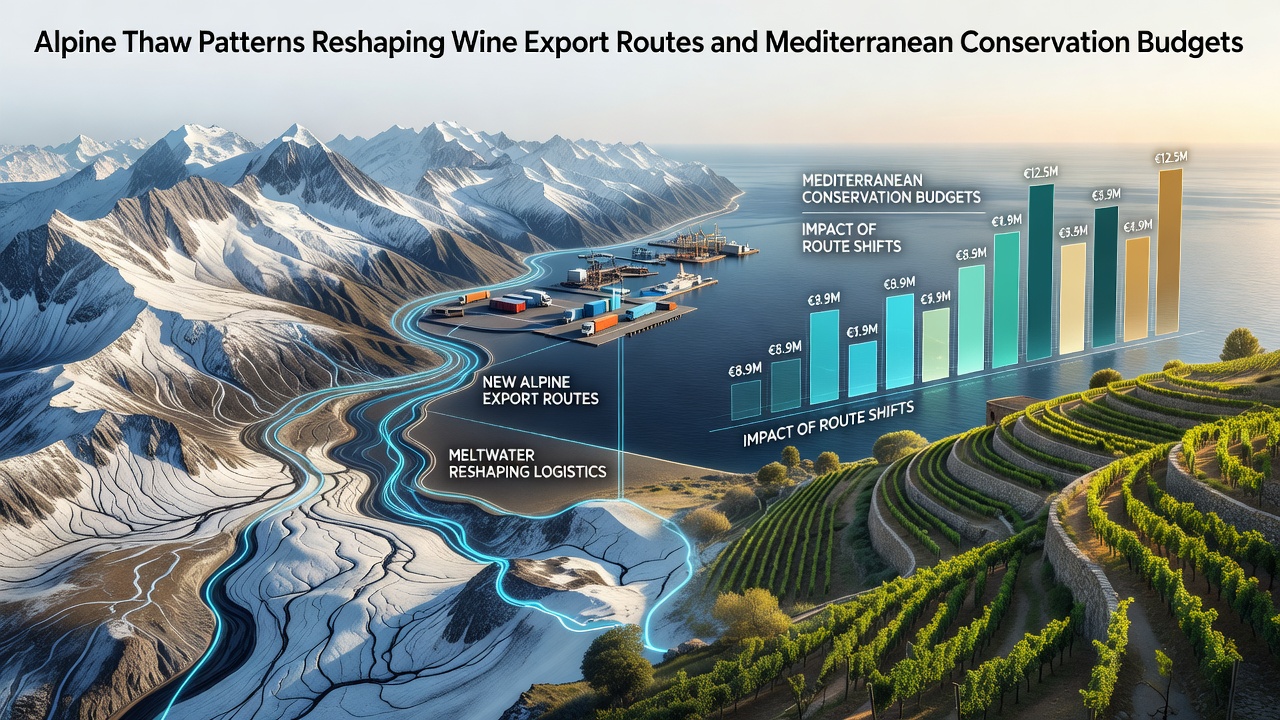
Alpine thaw patterns have accelerated in recent decades, and data released in September 2026 from multiple monitoring stations show earlier snowmelt dates combined with reduced winter accumulation across major passes such as the Gotthard and Brenner corridors. These changes directly affect heavy-goods vehicle schedules that carry wine shipments from production zones in southern Europe toward northern markets, forcing logistics operators to reroute or delay loads when spring flooding or rockfall risks close traditional paths. Transport authorities in Switzerland and Austria report that the number of closure days on key Alpine highways rose by 18 percent between 2020 and 2025, according to figures compiled by the European Environment Agency.
Wine exporters therefore face higher fuel costs and longer transit times when they shift cargo onto lowland rail lines or coastal shipping alternatives. Industry records indicate that average delivery times from Piedmont and Rhône vineyards to German and Scandinavian distributors lengthened by two to four days during the 2025 harvest season. Rail operators have responded by adding capacity on the Lyon-Turin base tunnel corridor, yet slot availability remains constrained during peak autumn months when both wine and olive oil shipments compete for space.
Shifts in Export Logistics and Infrastructure Investment
Governments and private freight companies have begun allocating funds toward upgraded tunnels and reinforced embankments designed to withstand increased meltwater volumes. A 2025 joint report by the Swiss Federal Office for the Environment and the French Ministry of Ecological Transition documented that planned tunnel ventilation upgrades alone will require an additional 340 million euros through 2030. These expenditures compete with other infrastructure priorities, including port expansions along the Mediterranean that handle bulk wine exports to non-European markets.
At the same time, conservation budgets in the Mediterranean basin have experienced reallocations as national and regional authorities redirect resources toward climate-adaptation projects in the Alps. Mediterranean countries participate in shared EU funding frameworks that now earmark larger portions for mountain resilience measures, leaving smaller envelopes for marine protected areas and coastal wetland restoration. Figures released by the UN Environment Programme Mediterranean Action Plan show that the proportion of annual conservation grants directed to Alpine-related projects increased from 12 percent in 2018 to 27 percent in 2025.
Impacts on Mediterranean Marine and Coastal Programs
Marine research institutions have recorded measurable slowdowns in monitoring campaigns for seagrass meadows and migratory fish stocks as grant cycles shorten. Teams in Spain and Greece postponed scheduled vessel surveys in 2026 because funds previously available for fuel and equipment maintenance were transferred to early-warning systems for Alpine debris flows. The result is a thinner dataset for species whose population trends inform quota decisions for sustainable fisheries that indirectly support regional economies.
Coastal municipalities that rely on EU structural funds for beach nourishment and erosion control now compete with Alpine cantons for the same adaptation streams. In one documented case, a Sardinian wetland restoration project scaled back its planting phase by 35 percent after the regional authority received notice that matching funds had been redirected to stabilize a section of the Aosta Valley rail line threatened by permafrost thaw. Observers note that such trade-offs appear more frequently in annual budget circulars issued each September.
Emerging Adaptation Measures Across Regions
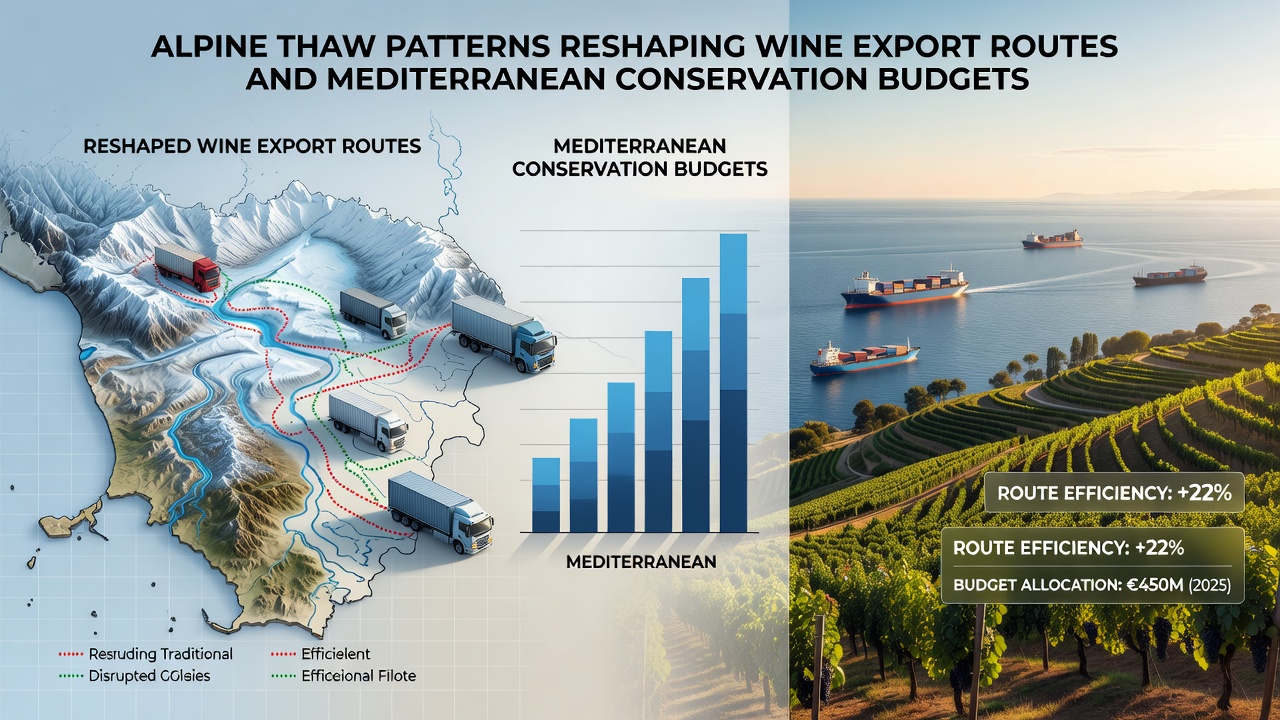
Logistics firms have tested new routing algorithms that incorporate real-time snow-water equivalent data from satellite platforms operated by the European Space Agency. Early results show that predictive modeling can reduce unexpected delays by up to 22 percent when shippers pre-book alternative corridors through the Pyrenees or the Carpathians. Meanwhile, Mediterranean conservation groups have formed cross-border consortia to pool monitoring equipment, thereby stretching limited budgets further.
Academic studies from Australian and Canadian research teams have contributed comparative analyses of mountain thaw effects on agricultural supply chains, highlighting parallels with changes observed in the Andes and the Rockies. These papers emphasize that integrated planning across transport and environmental ministries tends to produce more stable long-term budget forecasts than siloed decision-making.
Conclusion
September 2026 data releases confirm that Alpine thaw patterns continue to influence both the timing and cost structure of wine exports while reshaping the distribution of conservation resources around the Mediterranean. Infrastructure upgrades, revised routing strategies, and cross-sector funding mechanisms represent the primary responses currently underway. Ongoing monitoring by national agencies and international organizations will determine whether these adjustments maintain export reliability and ecological protection targets in the years ahead.